
Views: 0 Author: Site Editor Publish Time: 2026-07-29 Origin: Site


In modern extrusion lines, precision dictates profitability and overall success. Plant managers, extrusion line engineers, and procurement directors constantly seek better downstream equipment. You want to upgrade or specify machinery to maximize factory yield. Unfortunately, inconsistent pulling speeds and excessive clamping pressure frequently ruin production runs. These common issues cause severe wall thickness variations. They also lead to immediate profile deformation. Such defects cause astronomical extrusion scrap rates across your facility. You need a reliable solution to eliminate this expensive material waste entirely. This article provides a strict technical framework for evaluating modern downstream equipment. We will explore how to select the right puller system. You will evaluate equipment based on specific pneumatic capabilities and traction force. We will also discuss complex line synchronization requirements. We will detail why synchronization is the ultimate goal. You will discover how pneumatic actuation outperforms legacy methods. By evaluating these factors, you ensure long-term operational success and upgrade your production line confidently.
Consistent Clamping Force: Pneumatic control ensures uniform pressure over the extruded profile, preventing deformation in thin-walled pipes and sensitive tubing.
Traction and Synchronization: Upgrading to a modern caterpillar haul-off with AC servo drives eliminates slippage and guarantees precise synchronization with the main extruder.
Total Cost of Ownership (TCO): Standardizing on high-quality belt materials and accessible pneumatic manifolds significantly reduces downtime associated with maintenance and belt replacement.
Application Scalability: Evaluating equipment based on contact length, belt width, and maximum traction force (kN) ensures the unit matches current production requirements and future scalability.
The haul-off represents the ultimate bottleneck for quality control. It sits at a crucial point in downstream extrusion. Unstable pulling directly translates to out-of-spec products. It creates massive material waste across the factory floor. Every extrusion professional understands the cost of instability. When a puller slips, it causes a ripple effect upstream. The extruder continues pushing melted polymer at a constant rate. However, the downstream equipment fails to pull it away smoothly. This mismatch creates rippled surfaces and uneven dimensions. We must eliminate this bottleneck to achieve true quality control. A reliable haul-off acts as the pacemaker for the entire line.
We define a successful extrusion puller by three critical benchmarks. First, it must maintain an absolutely constant linear speed. Second, it requires zero slippage against the product surface. Third, it must deliver a non-destructive grip. This holds true regardless of any line speed fluctuations upstream. Achieving constant linear speed is non-negotiable for high-end manufacturing. Zero slippage ensures the product dimensions remain perfectly uniform. A non-destructive grip protects the delicate surface finish.
Historically, operators relied heavily on legacy mechanical screw-down tensioning. Those older systems lacked responsiveness and dynamic flexibility. They applied rigid force. They did not forgive minor lumps or bumps in the profile. They often crushed delicate profiles during minor line surges. Today, a modern Pneumatic caterpillar offers superior dynamic adjustment capabilities. It adapts instantly to dimensional variations in real-time. This technological progression changes everything for quality assurance. It acts like a shock absorber. It maintains grip while adapting to slight physical variations.
Precision air cylinders drive modern haul-off systems efficiently. They apply and maintain independent upper and lower belt pressure continuously. This pneumatic actuation protects fragile extrusions from sudden impacts. The mechanics of pneumatic actuation deserve closer inspection. Air cylinders provide a valuable cushion effect. They squeeze the product firmly but gently. Independent upper and lower belt pressure gives operators immense control. You can apply more force from the bottom track if necessary. Integrated pressure regulators remove the guesswork from the equation. Operators simply input the desired bar pressure into the system. You can lock in precise force metrics for every product recipe.
Drive systems represent another critical feature of high-performance units. Drive systems must match this pneumatic precision perfectly. Dual AC vector motors or servo drives are absolutely essential here. AC vector motors provide excellent torque at very low speeds. Servo drives offer even greater precision for demanding applications. They provide independent track control for flawless daily operation. They communicate instantly back to the central PLC. This enables seamless integration across the entire downstream line.
Next, consider your belt type caterpillar variants carefully. Options include poly-V, flat, sponge, and custom profiled cleats. A poly-V belt offers excellent grooved tracking. Flat belts work well for wide, smooth surfaces. Sponge belts compress around highly sensitive or hollow profiles. Custom profiled cleats grab specific shapes without crushing them. The choice depends heavily on the inherent friction coefficient. You must evaluate the specific fragility of your extruded material. Make this feature-to-outcome decision carefully before purchasing equipment.
Finally, structural rigidity matters immensely for long-term durability. The structural rigidity ties all these components together securely. A flimsy frame will flex under high traction loads. Heavy-duty machine frames dampen unwanted vibrations effectively. Heavy-duty frames prevent this mechanical flexing entirely. They keep the tracks parallel and true at all times. They maintain perfect alignment at incredibly high extrusion speeds. A rigid frame prevents micro-variations from ruining product dimensions.
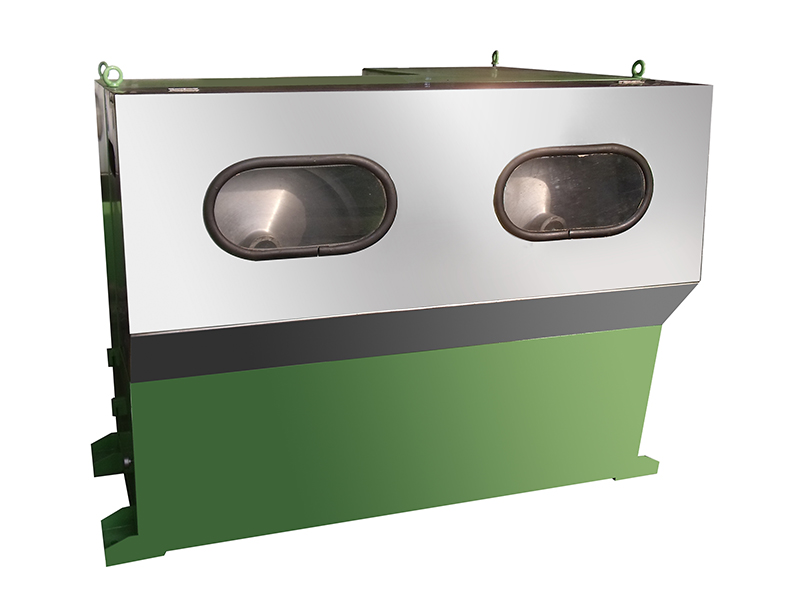
Extrusion facilities handle highly diverse product ranges daily. You must match equipment capacity to your exact application needs. Light-to-medium duty applications include delicate medical tubing runs. Medical tubing manufacturers face strict regulatory tolerances daily. They cannot afford any ovality in their products. Light-to-medium duty pullers handle this challenge perfectly. They use highly sensitive pneumatic valves. These valves adjust pressure in micro-increments. Small-diameter PVC/PE pipes and architectural window profiles also require this touch. The complex internal webbing of a window profile collapses easily. These units prioritize a much smaller factory footprint. Small footprint machines save valuable floor space in crowded cleanrooms. High-speed responsiveness ensures the puller reacts to the extruder output instantly.
Heavy-duty applications demand a completely different engineering approach. Think about large-diameter HDPE/PVC pipes used in municipal infrastructure. Large-diameter HDPE pipes weigh hundreds of kilograms per meter. You must grip a massive surface area to move them safely. Thick-walled conduits and industrial profiles fall into this category too. High-contact length becomes the most critical specification here. It spreads the clamping force over a larger area. This prevents localized crushing of the pipe wall. The system requires maximum traction force constantly. Robust gearboxes multiply the motor torque to incredible levels.
Finally, custom or complex profiles present unique challenges. Multi-lumen tubing and asymmetric profiles distort easily under pressure. Custom profiles require specialized tooling on the caterpillar tracks. Adjustable track positioning helps mitigate this operational risk. It lets you center irregular shapes perfectly. Custom-cleated belts handle bizarre geometries flawlessly. They interlock tightly with the product geometry. They distribute pressure evenly to preserve the final shape. This prevents the profile from twisting as it cools.
Selecting the perfect caterpillar haul-off requires strict methodology. Technical sizing metrics form the foundation of your equipment choice. You should evaluate these metrics thoroughly before deciding. Start by calculating your required traction force accurately. Measure this in Newtons or kN against your target line speed. You must also measure the maximum opening width. The maximum opening width determines if your largest product fits. The effective track contact length dictates your overall gripping efficiency.
We recommend following these strict steps for integration readiness:
Verify PLC compatibility using standard industrial protocols.
Confirm support for Profinet or EtherCAT networks.
Check for closed-loop control capabilities across the line.
Ensure compatibility with inline laser diameter gauges.
Test remote monitoring features for diagnostic purposes.
Validate alarm handling procedures within the main software.
Compliance guarantees a safe working environment for everyone. Highlight CE marking requirements for European market deployments. Regional safety guarding standards dictate physical barrier requirements. Review these safety standards before purchasing any machinery. You should also evaluate vendor capabilities stringently. Vendor capabilities separate excellent partners from poor ones.
Demand proof of custom belt profile manufacturing capabilities.
Check their inventory for readily available replacement parts.
Evaluate their commitment to ongoing hardware upgrades.
Analyze their regional technical support presence carefully.
Below is an equipment sizing chart for your reference.
Application Category | Required Traction Force | Typical Belt Width | Ideal Drive System |
|---|---|---|---|
Medical Tubing | Low (<1 kN) | 50 mm - 100 mm | Precision Servo |
Window Profiles | Medium (2 - 5 kN) | 100 mm - 150 mm | AC Vector Control |
Large HDPE Pipes | High (>10 kN) | 200 mm - 300 mm | Heavy-Duty Dual Drive |
We must acknowledge the harsh reality of belt wear. All traction belts degrade under continuous industrial use. You must frame your evaluation around these inevitable degradation rates. Ask suppliers how quickly their compounds wear down under specific tensions. Evaluate how difficult it is to replace them manually. Quick-change cantilevered designs provide a massive operational advantage. They allow a single operator to slide old belts off quickly. They can install fresh belts without dismantling the entire machine. This design saves immense maintenance hours annually.
Air supply dependencies pose a hidden operational risk. Factory air pressure drops happen in almost every facility. These drops will affect any pneumatic system immediately. You need built-in pressure monitoring devices on the puller itself. Low-pressure alarms prevent catastrophic line failures before they happen. Fail-safe gripping mechanisms engage mechanically if the primary air supply vanishes. This protects the product from suddenly slipping backwards.
Operator adoption risks often derail new equipment installations. Advanced digital controls demand proper, comprehensive operator training. Shift-change errors happen frequently when workers guess the settings. Intuitive HMI touchscreens solve this usability problem effectively. Saved recipe management ensures absolute product consistency. Every operator loads the exact same parameters with one button press. This eliminates guesswork from daily production runs entirely.
Choosing the right pneumatic unit impacts your entire production line. It successfully balances gentle product handling with unwavering speed stability. This perfect balance directly reduces scrap rates and boosts profitability. Upgrading your haul-off system prevents costly downtime altogether. It drastically improves final product quality and dimensional consistency.
Take these immediate actions to improve your extrusion process:
Audit your current extrusion scrap rates immediately to identify baseline losses.
Consult an application engineer to calculate exact traction force needs.
Determine the specific belt material required for your heaviest product run.
Schedule a maintenance review of your factory air supply reliability.
Implement a standardized training program for new touchscreen interfaces.
A: Pneumatic systems self-adjust to minor profile variations instantly. They provide consistent, gentle pressure that strictly prevents material crushing. Mechanical clamps lock at a rigid distance. They cannot adapt to surges and frequently deform out-of-tolerance materials.
A: Contact length is primarily dictated by the required pulling force. It also depends heavily on the fragility of the product. Slippery or delicate materials always require longer contact lengths. This distributes traction evenly without needing high clamping pressure.
A: Yes. Modern units utilize advanced servo drives and standardized communication protocols. They easily sync with central extrusion PLCs to form a highly accurate closed-loop system. They often tie directly to a diameter gauge for automated speed adjustments.
A: You must perform routine checks for hidden air leaks. Operators should drain inline moisture traps regularly. It is crucial to inspect pneumatic cylinder seals for wear. Finally, monitor the tensioning guide rails to ensure continuous smooth actuation.